

How the material comes out
Sand is the most consumed substance on earth after water. Getting it out of the ground properly — and processing it consistently — is our forte.
Two methods, one concession
Extraction and processing of these minerals needs to be properly planned and managed to ensure sustainability. It is in this area that our forte and speciality lie — covering both dry and wet processing methods.
Wet processing — dredging
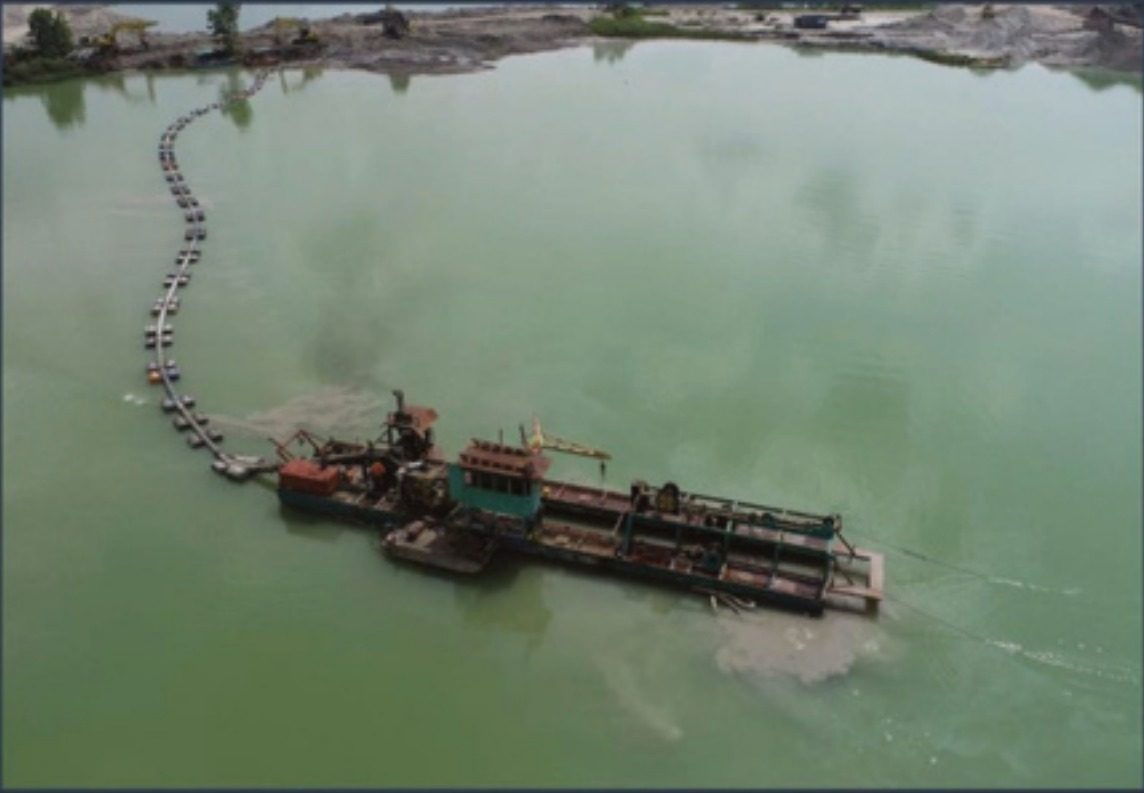
A cutter-head suction dredge works the water bodies across the concession. The cutter head loosens material at the bed; submerged and dredge pumps carry the slurry to shore through a floating pipeline. This is how we work the deeper deposits, and it is the more efficient method where water is already present.
Dry processing — open cast
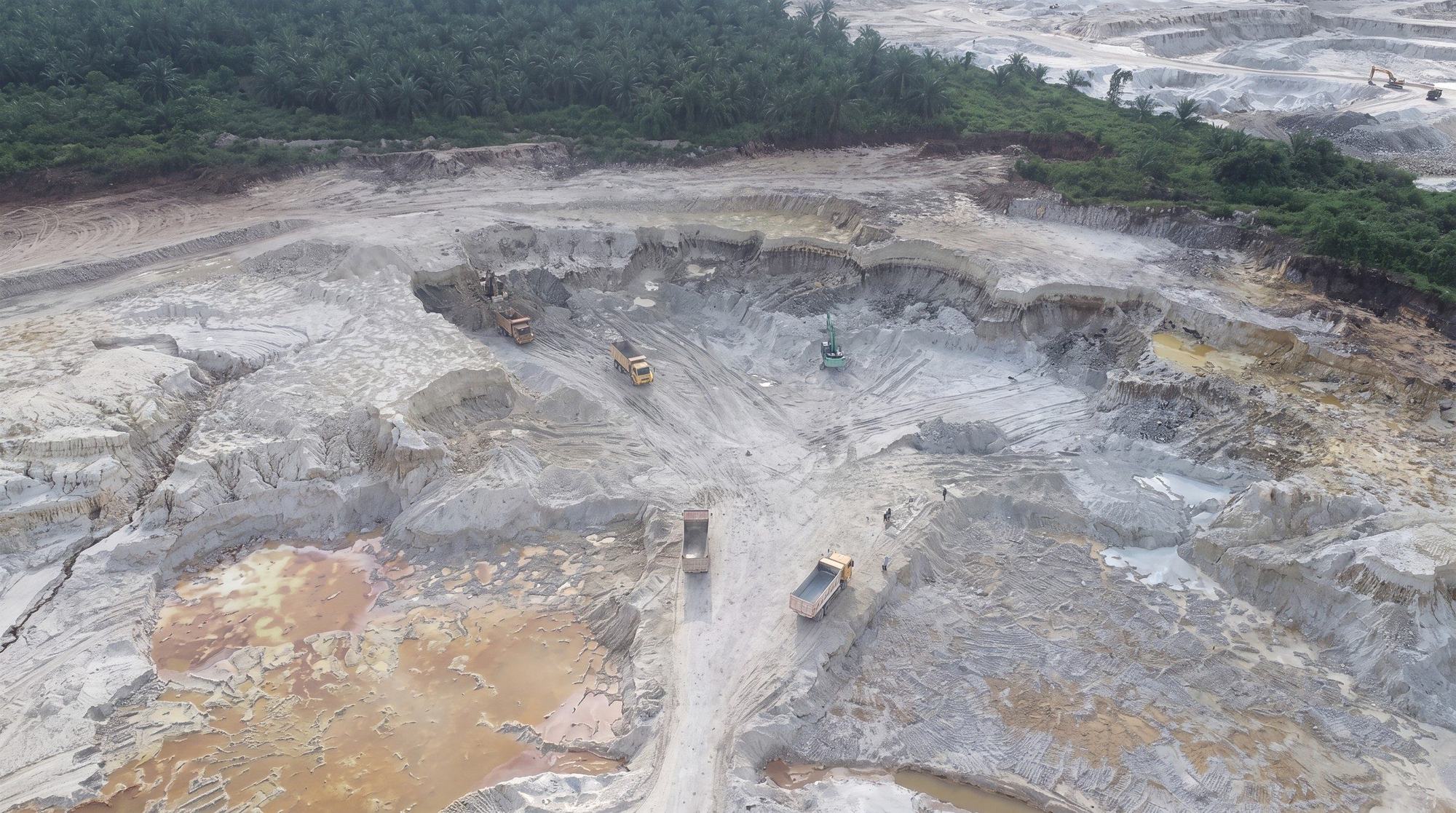
Where the deposit sits above the water table, we work it open-cast. Overburden — largely clay and peat soil — is removed first, then the sand beneath is excavated and dewatered before stockpiling.
Separation and stockpiling
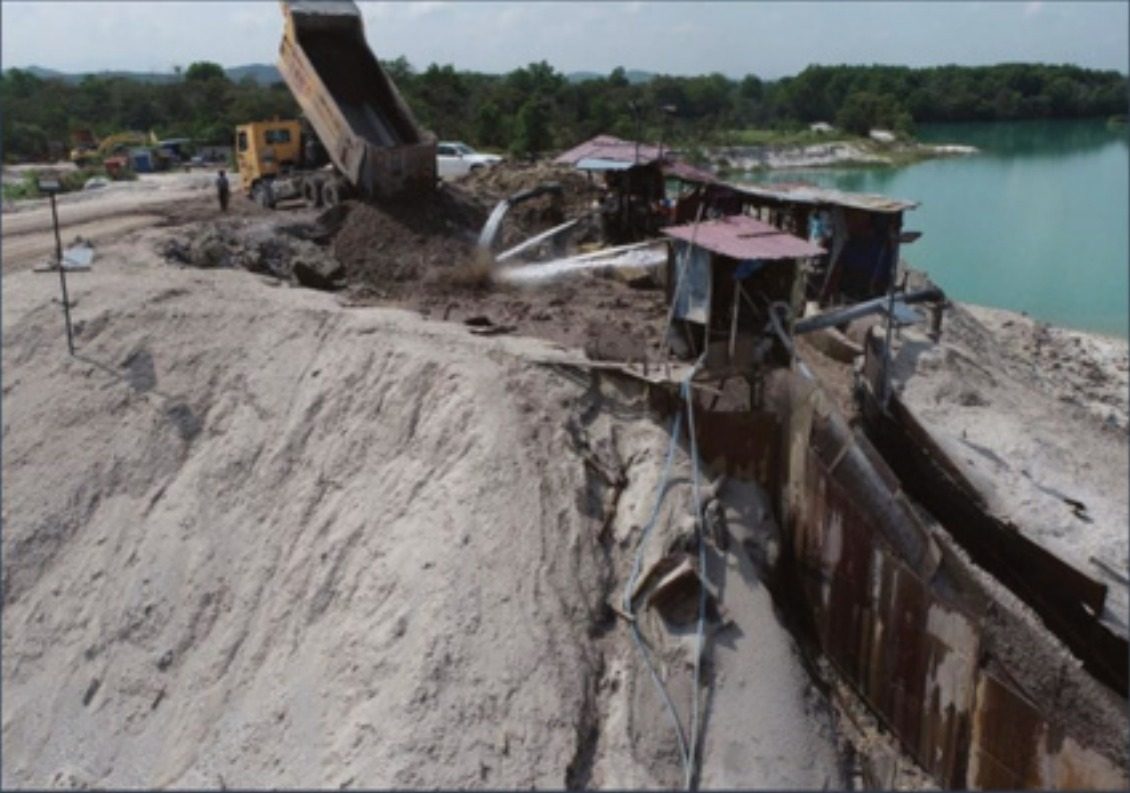
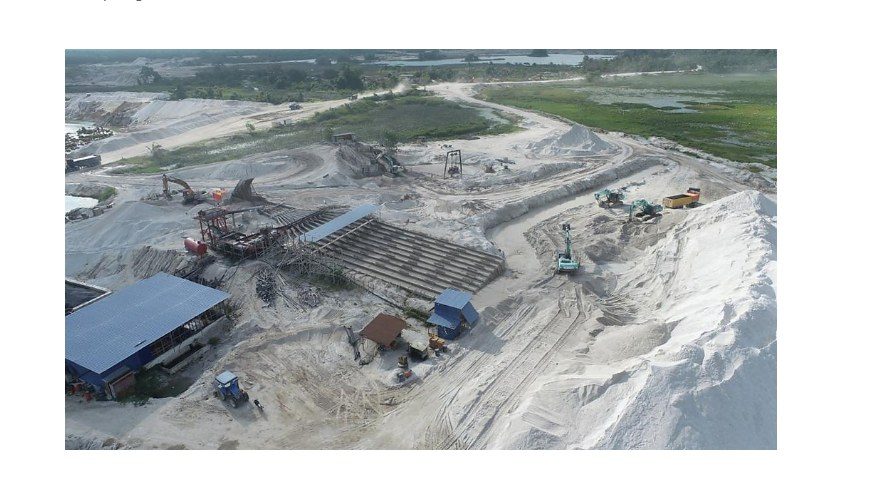
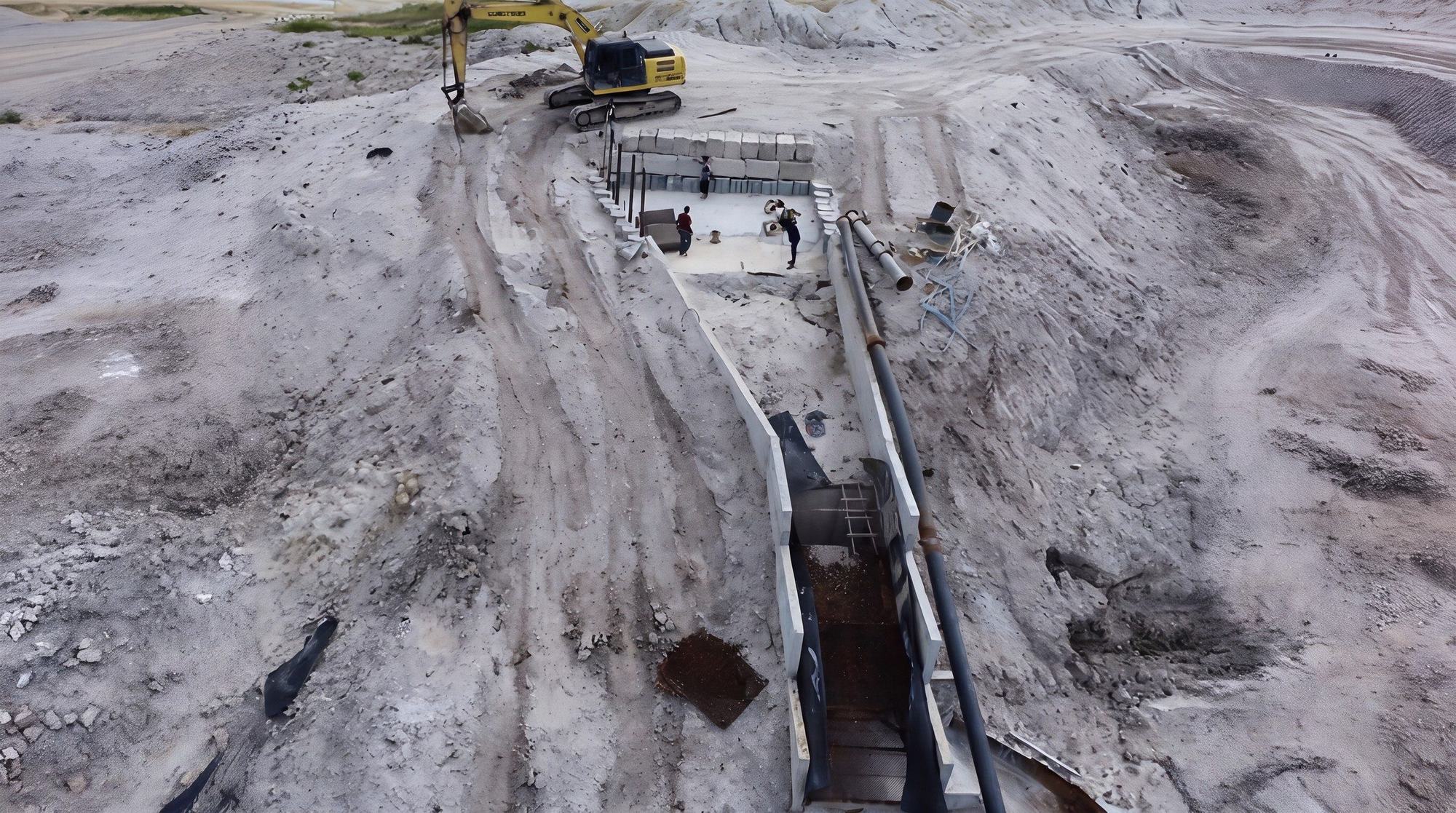
At the palong, a high-pressure water jet separates clayed material from sand. The sand is then screened at the grizzly before being stockpiled. Material is loaded and properly compacted before transport to customers.
Tin extraction
Tin ore is recovered using the gravity concentration method — which relies on tin's higher specific gravity relative to sand. At the tin palong, raw material is separated by size, with only particles below 2mm passing through. The concentrate then goes through a series of physical separation steps before being dried and dispatched.
From ground to lorry
- 01
Overburden removal
Clay and peat soil are stripped back to expose the deposit beneath. At the HPMSB site this layer is substantial.
- 02
Extraction
Dredging in the water bodies; open-cast excavation on dry ground. The method follows the deposit, not the other way round.
- 03
Separation
At the palong, high-pressure water separates clay from sand. Grizzly screening sorts by particle size.
- 04
Stockpile and dispatch
Material is stockpiled, loaded and compacted before transport. Roughly 40% of Klang Valley sand demand leaves from here.